Strong vs Weak Poses
Why some poses hold an audience and others vanish, and how to tell the difference before you have the words for it.
Recording
Animation is usually taught as the study of motion. We talk about arcs, easing, overlap, follow-through, the language of things in transit. But motion is a consequence, not a cause. What an audience actually reads, frame to frame, is a sequence of held ideas, and the movement between them only carries meaning if those ideas had meaning in the first place. A beautifully interpolated transition between two poses that say nothing will still say nothing, only more smoothly.
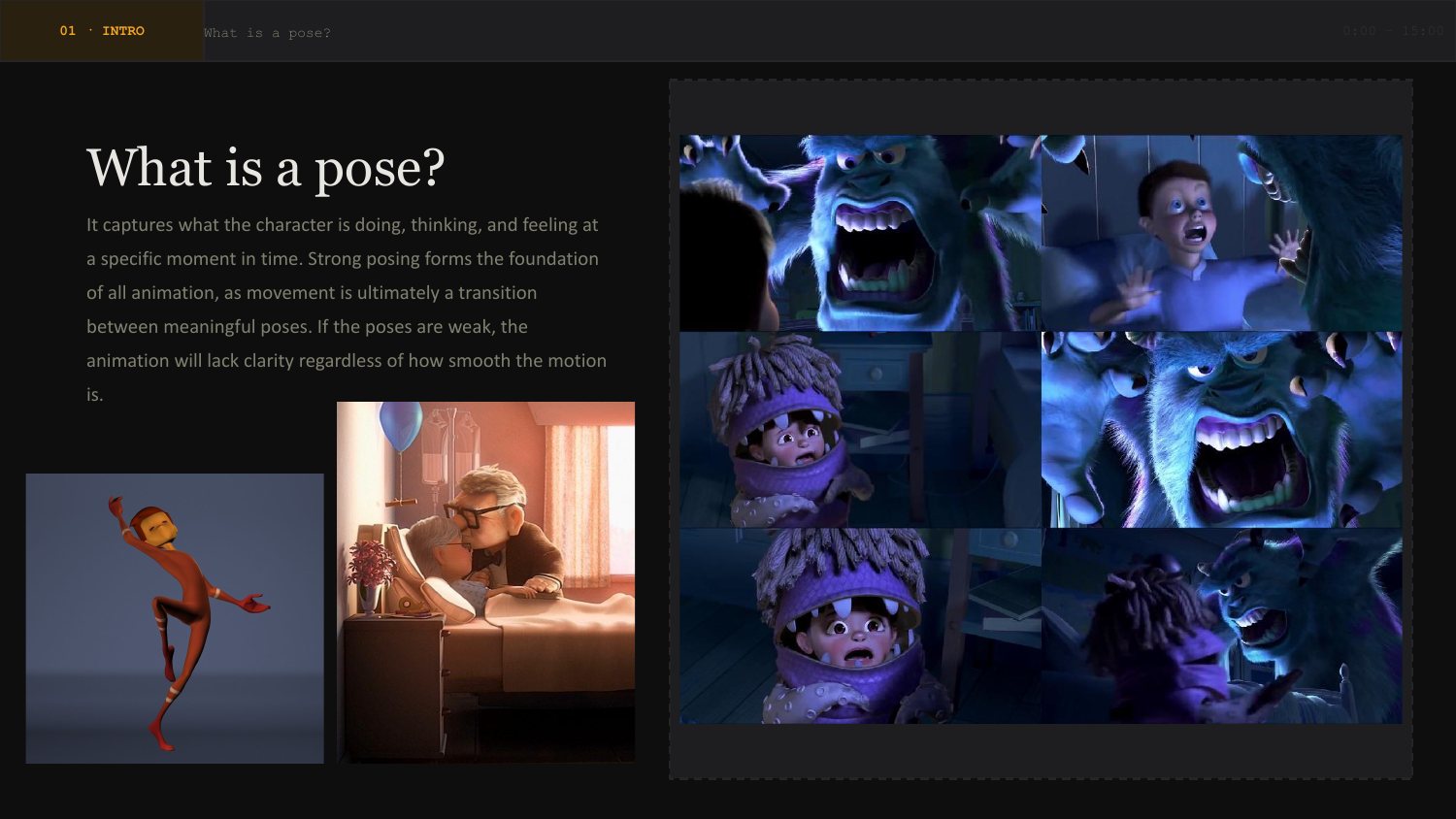
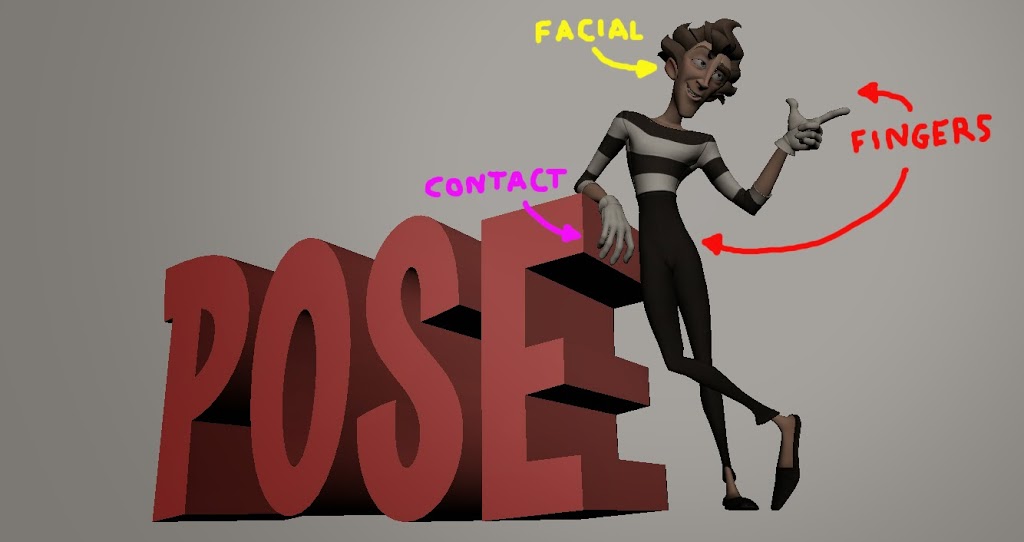
This session takes the pose as the unit of study. Not as a stage in a workflow (blocking, splining, polish) but as the place where the character's thinking actually lives. A pose captures what someone is doing, thinking and feeling at a single moment. Everything downstream inherits from that. Weak posing cannot be rescued by good timing, and this is the hardest thing to convince a student of, because timing is visibly technical and posing feels like taste.
What the session sets out to do
It is not a lecture on principles, and it is deliberately not software training. The aim is narrower and, I think, more useful: to make a student able to look at their own pose and say what is wrong with it, not that it feels off, but which specific quality is missing.
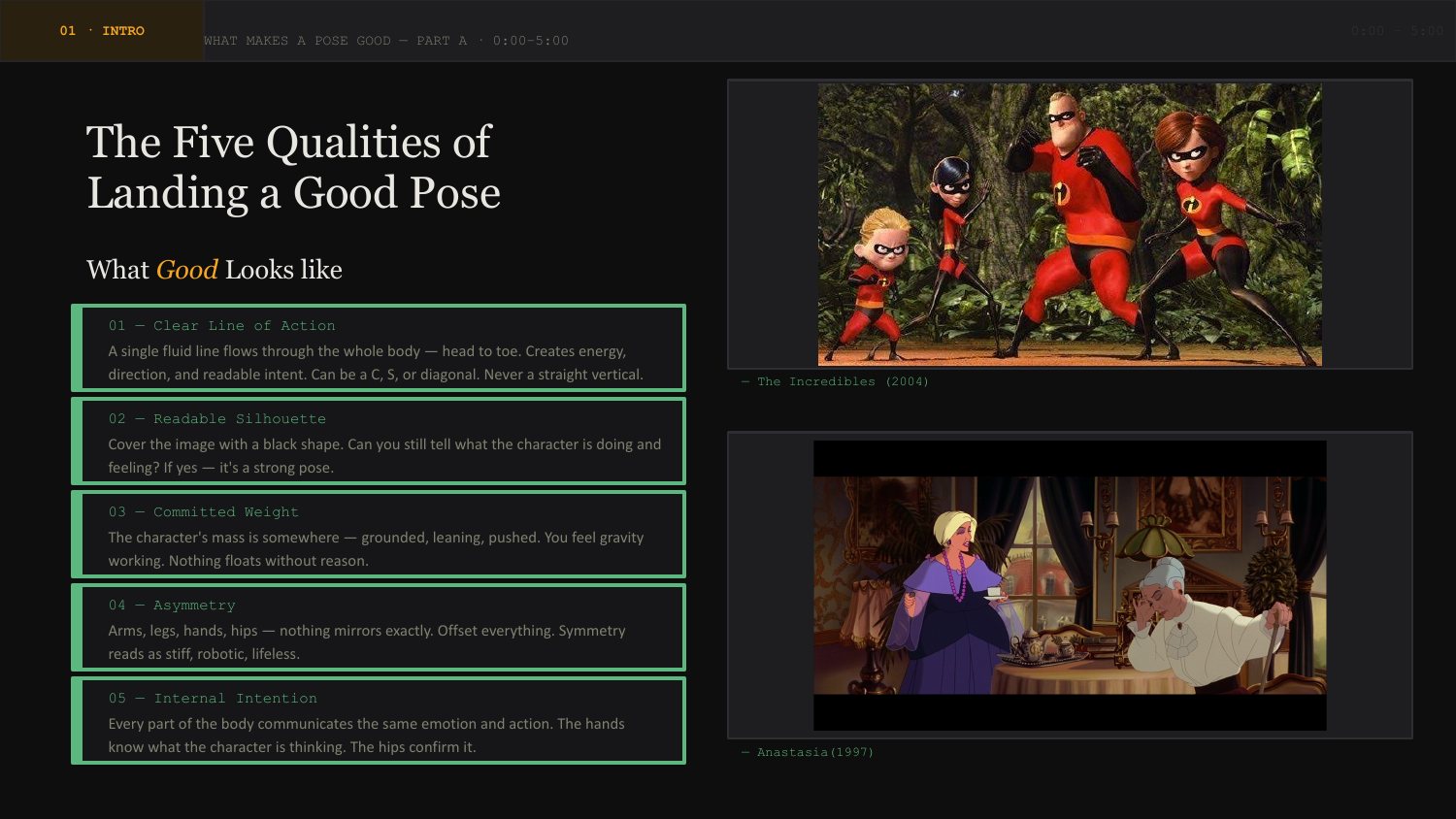
By the end, a participant should be able to trace the line of action through a figure and say whether it goes anywhere; read a silhouette as pure shape and judge whether the action survives the loss of detail; locate where a character's weight is actually committed; find symmetry they have introduced without noticing; and articulate whether every part of the body is arguing for the same idea. These are diagnostic skills rather than descriptive ones. The distinction matters: a student who can name the five qualities has learned vocabulary, while a student who can find the missing one has learned to see.
The concepts, and why these ones
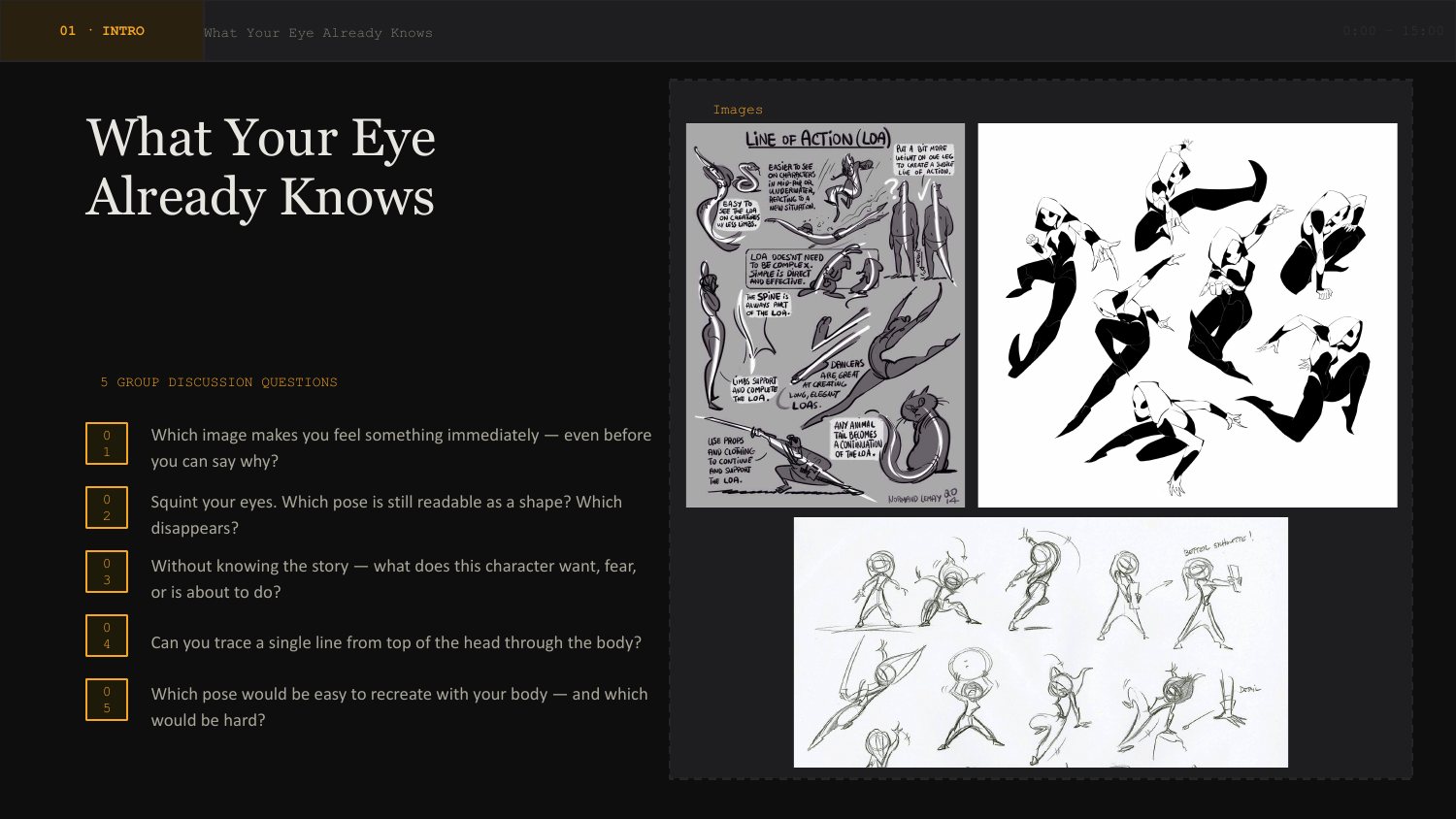
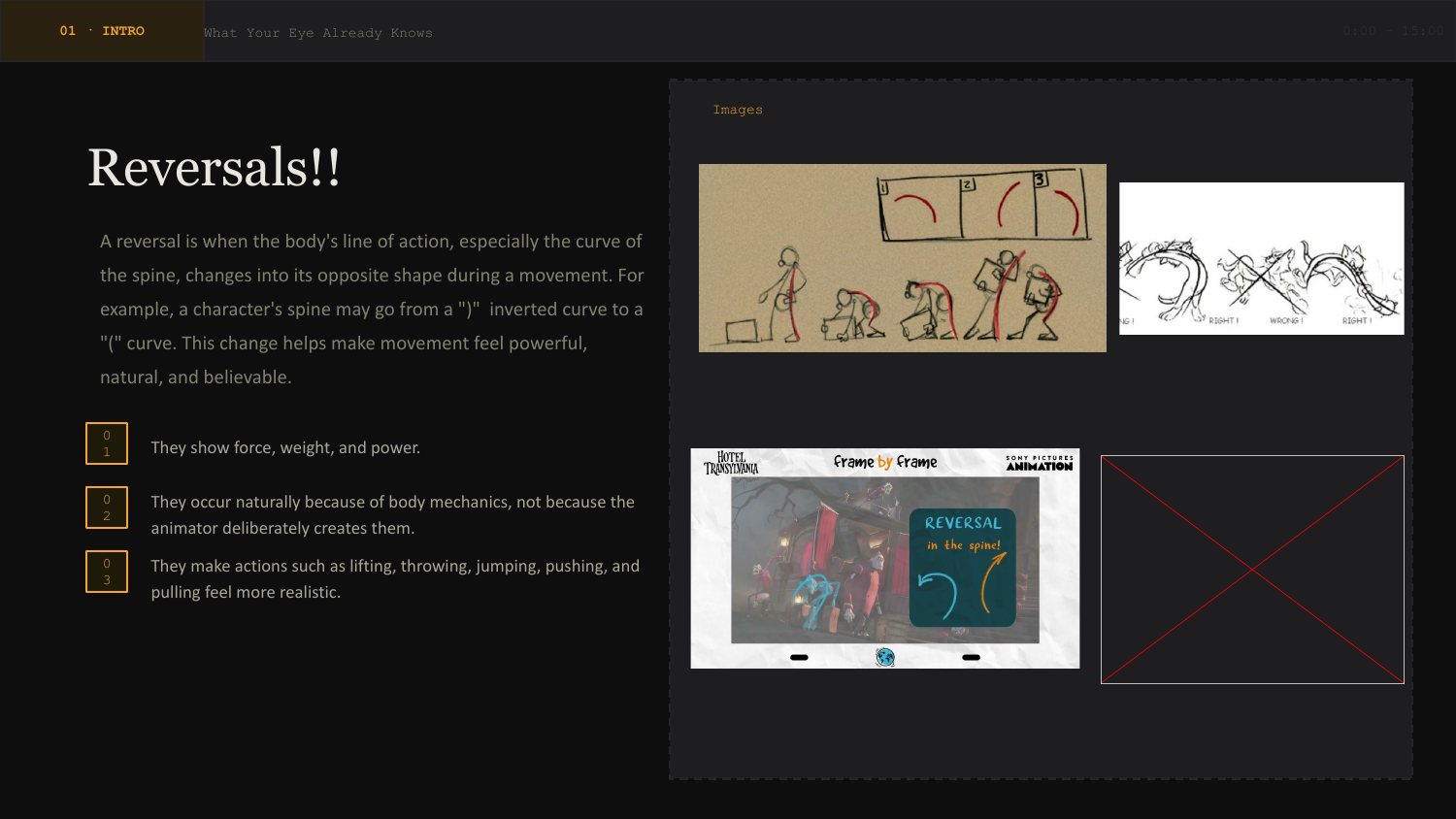
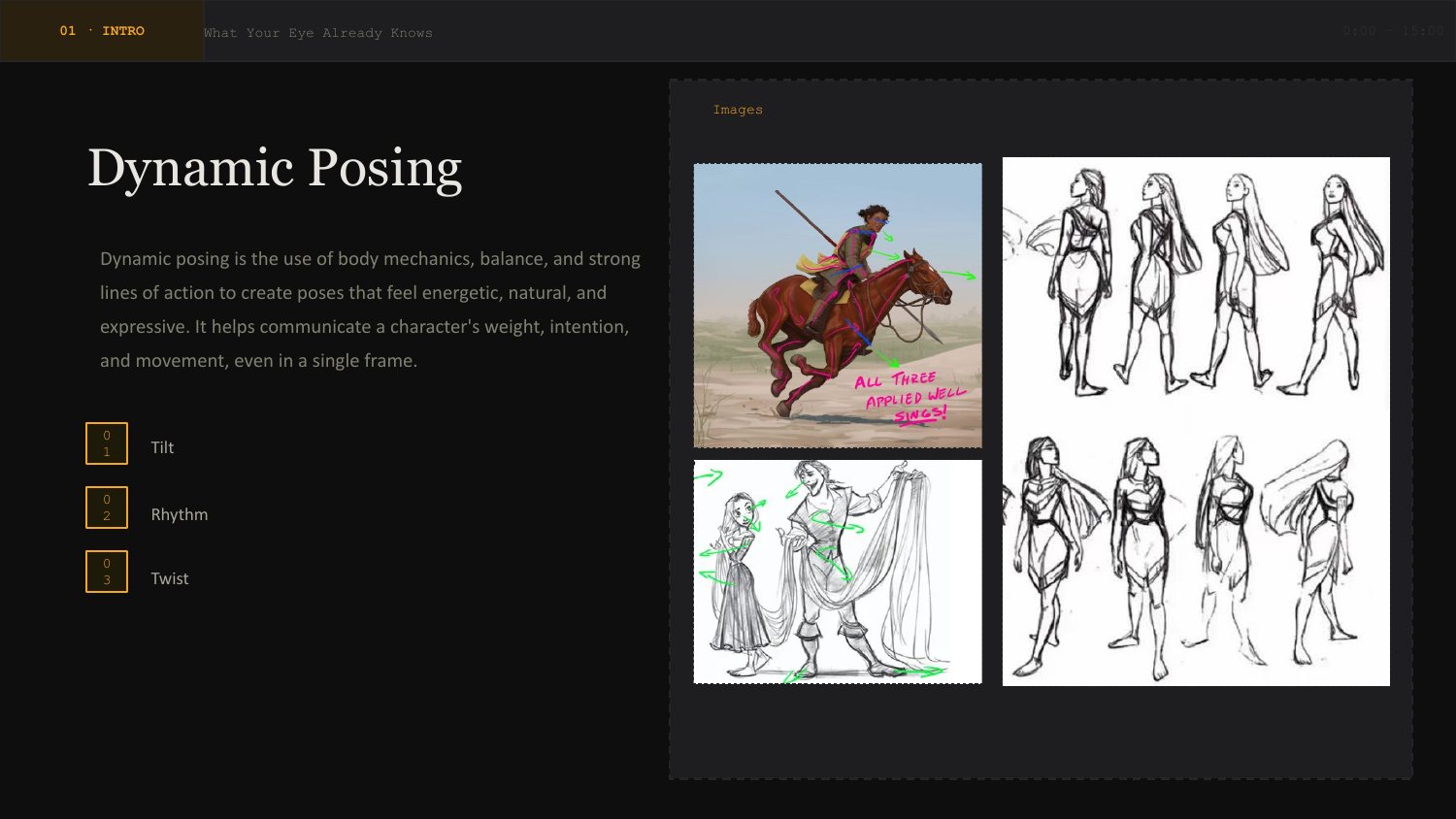
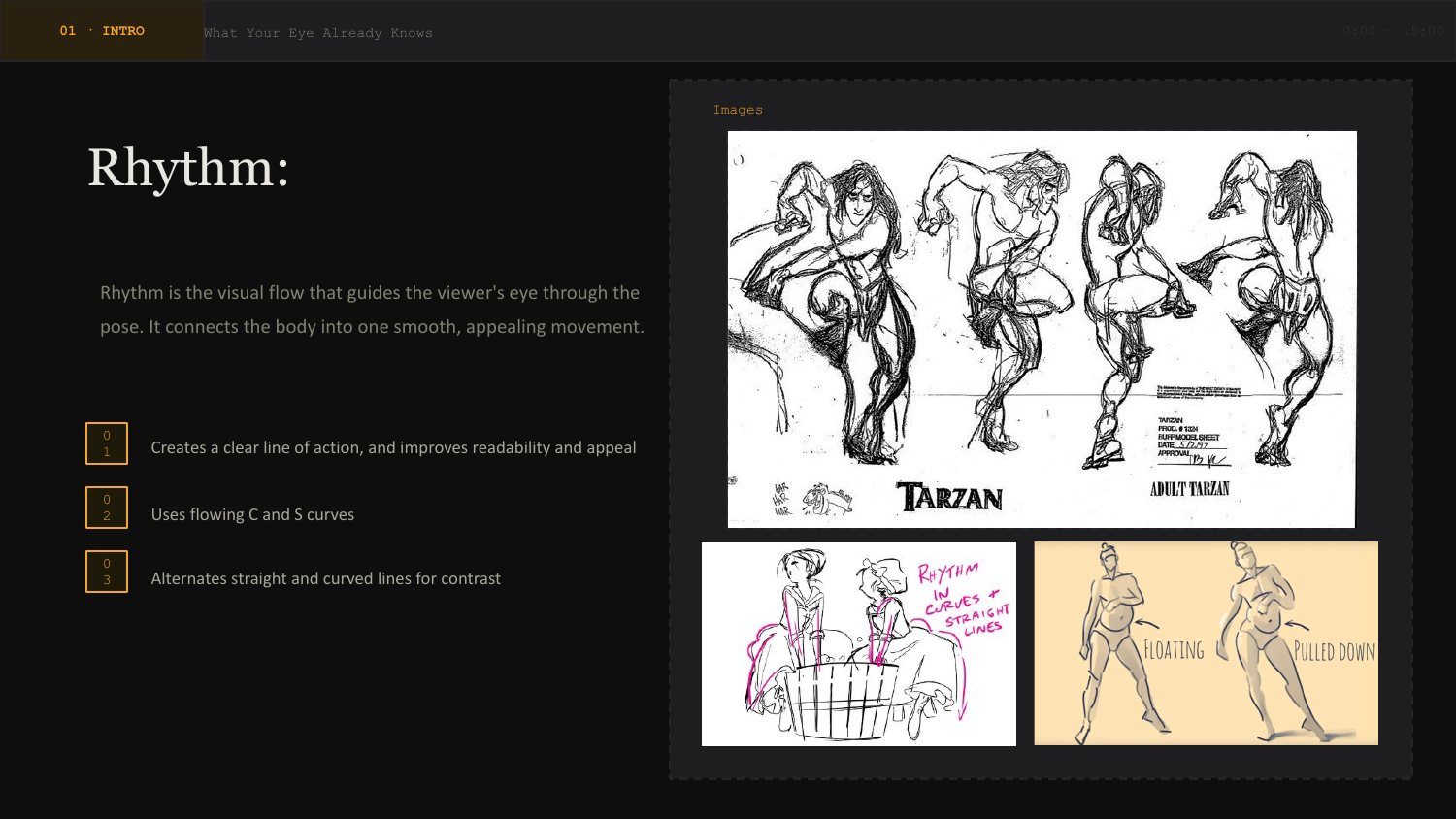
Line of action comes first because it is structural rather than decorative. A single curve running from the crown of the head through the spine to the feet gives the pose a direction for its energy to travel. When that line is a vertical, the rig's resting state, energy has nowhere to go, and the figure reads as placed rather than posed. Teaching it first establishes a habit: decide the shape of the whole body before adjusting any part of it.
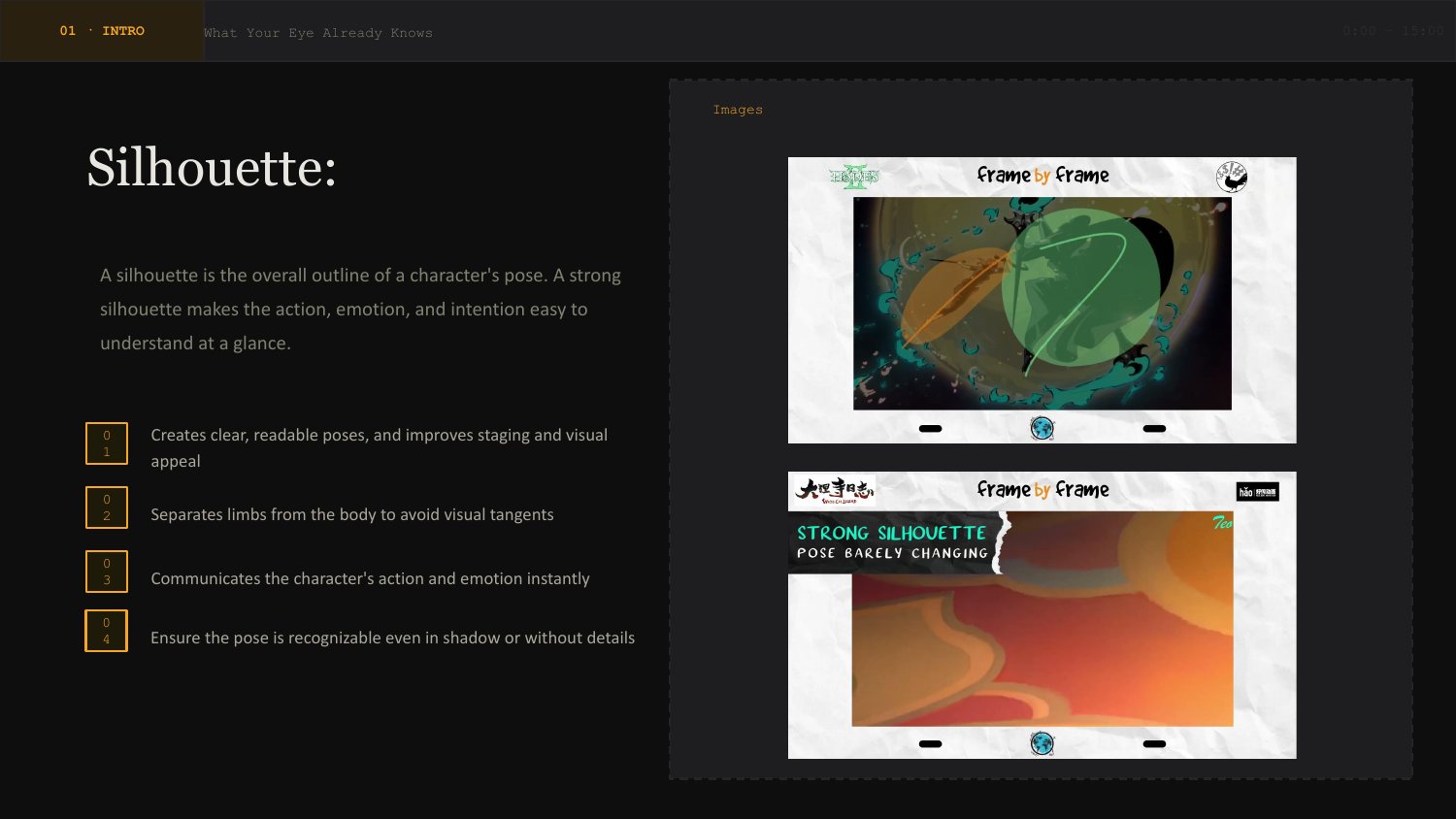
Silhouette follows because it is the most honest test available. Reduce a pose to a solid black shape and the ambiguity disappears; either the action is legible or it is not. It is also the cheapest test, which is why it is the one students actually keep using once the session ends. Any tool that requires a facilitator dies at the door.
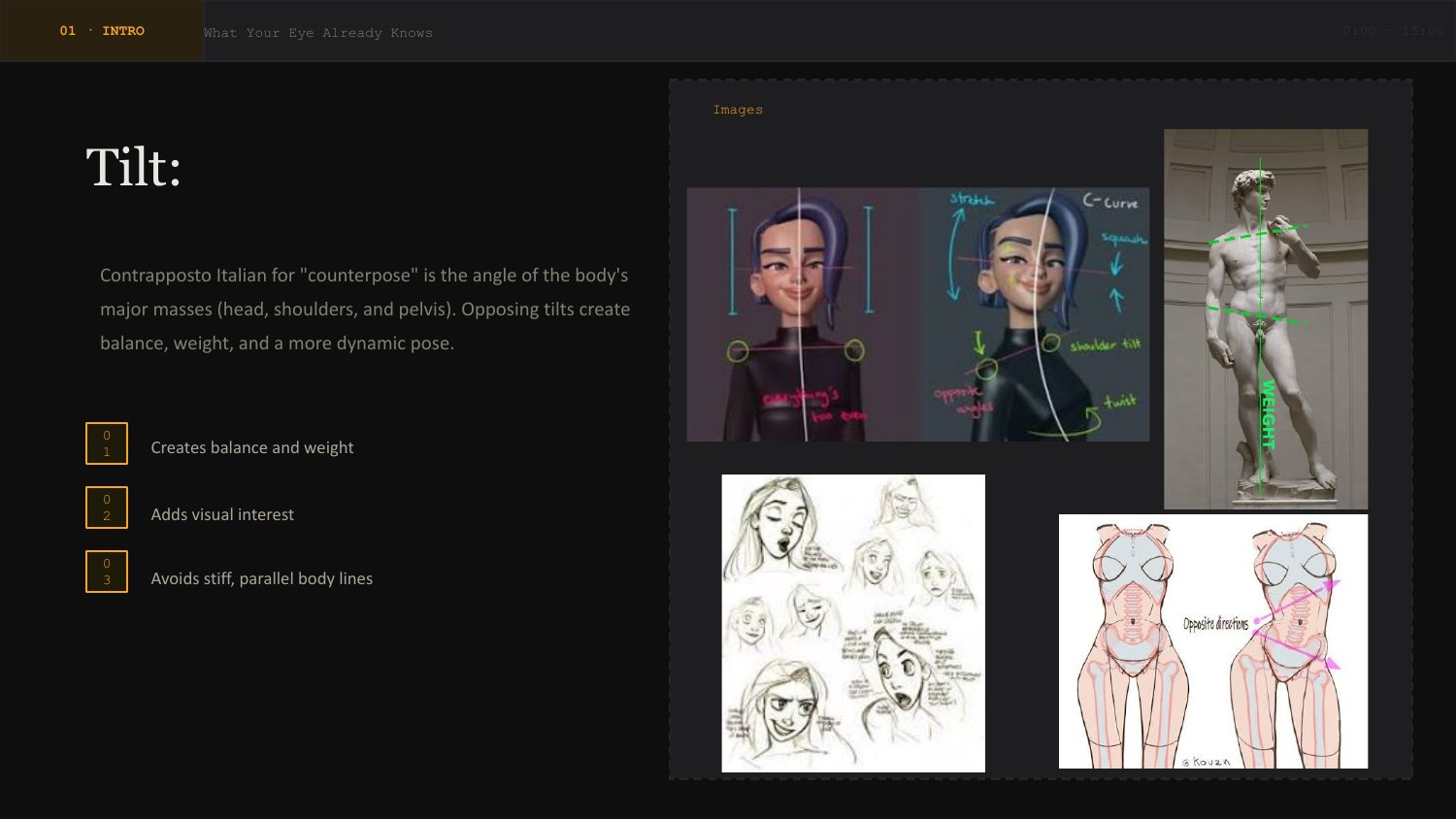
Weight is included because 3D removes it. A rig has no mass and no gravity; nothing settles unless the animator decides it should. This is a genuine difference from drawing, where the hand tends to imply weight even when the artist is not thinking about it. In 3D, weight is a deliberate act: which joints bend under load, which direction the torso leans, whether the centre of gravity sits over the supporting foot or somewhere the character would be falling from.
Asymmetry earns its place for a specific technical reason. The default state of every rig is a perfect mirror, and symmetry reads to the eye as manufactured rather than alive. This means the animator is not adding asymmetry so much as fighting a symmetry that is already there, on every joint, every time. Naming that as an active struggle rather than a stylistic preference changes how students approach it.
Intention closes the set because it is what makes the other four cohere. A pose can satisfy every formal quality and still fail if the hands are describing one emotion and the hips another. Coherence across the whole figure is what separates a technically correct pose from a persuasive one.
The reasoning behind how it is taught
Two decisions shape the hour, and both run against instinct.
The first is that vocabulary is withheld. The session opens with images and questions rather than definitions, and student responses are recorded without being corrected. The reason is that a term handed over before the perception it describes produces students who can recite line of action fluently while remaining unable to spot a dead one. A student who has already said that one just looks lifeless has built somewhere for the term to attach. Naming should arrive as relief, not as instruction.
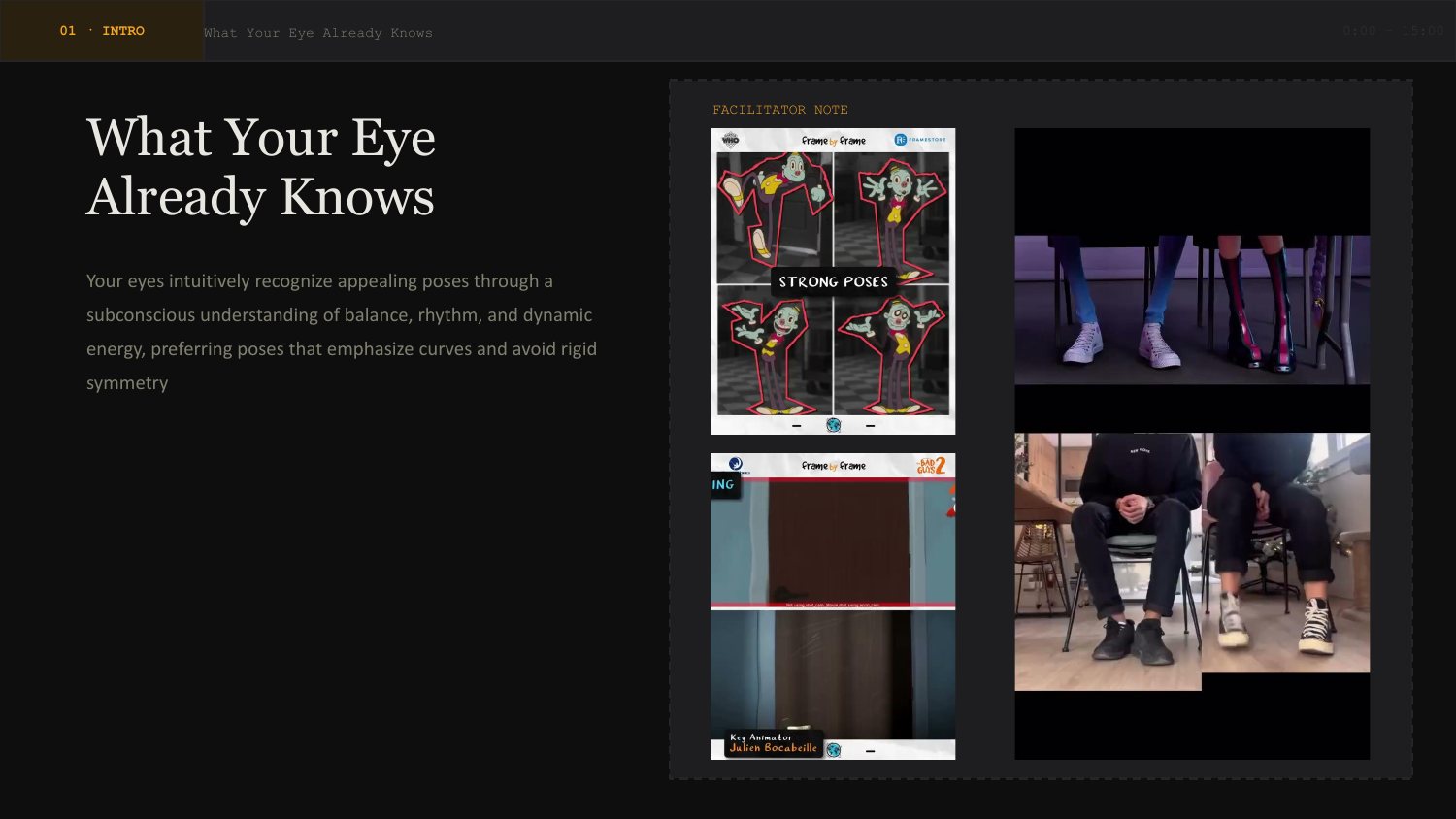
The second is that the body is used before the software. Students physically stand in the poses being discussed: they twin themselves deliberately, feel the deadness of it, then shift their weight and feel the difference. Proprioception is a faster and more durable teacher than explanation for anything concerning balance and weight, and it costs seconds. A student who has felt a twinned stance in their own spine recognises it in a viewport far quicker than one who has only been shown a diagram of it.
Both decisions rest on the same conviction: that posing is a perceptual skill before it is a technical one, and that perceptual skills are trained by provoking them rather than by describing them.